SciAps: From Field to Lab: How SciAps and Titan Minerals Are Strengthening Analytical Support in West Africa

As Nigeria works to grow exploration in gold, lithium, tin and rare earths and to process more of its minerals locally, getting reliable data quickly is becoming more important. SciAps makes handheld XRF, LIBS and NIR analysers that are used from early exploration through to quality control and metals recycling. The company recently partnered with Titan Minerals Ltd, which will handle sales and first-line technical support in West Africa.
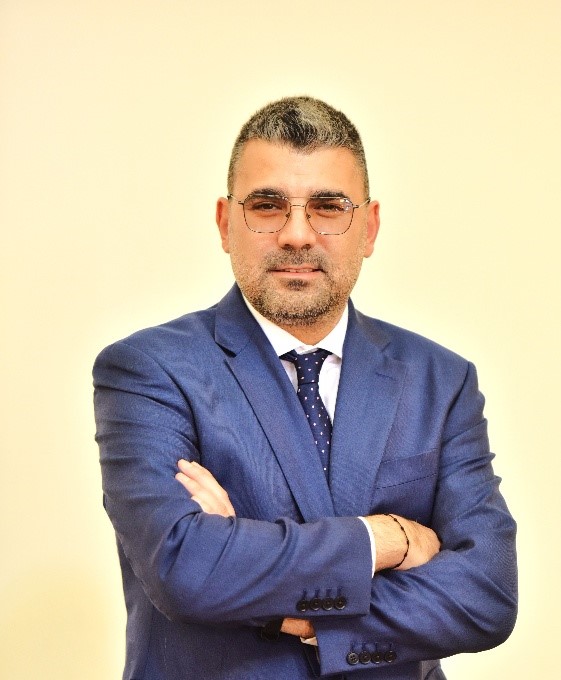
At Nigeria Mining Week, we spoke to Pieter du Preez, Regional Sales Manager Africa at SciAps Inc., about what the partnership means for customers in the region. He covers where portable analysis makes the biggest difference for geologists in the field, how it works alongside laboratory assay to cut turnaround times, and why fast, reliable data matters for building confidence in Nigeria’s mining sector.
01. SciAps builds handheld XRF, LIBS and NIR analysers used from exploration through to quality control and recycling. For readers meeting the company for the first time, where is SciAps already active in Nigeria and West Africa, and which applications are in most demand?
“SciAps provides advanced portable analytical technology to the mining, exploration, metallurgy and recycling industries, with our South African office playing an important role in supporting customers across the African continent. Our technologies address a growing need for fast, reliable elemental and mineralogical data, particularly in gold exploration, lithium and other critical minerals, geochemical analysis, grade control and materials identification. In West Africa, SciAps already has a wide customer base ranging from Oil & gas, Au, Li, critical mineral exploration and Alloy recycling to precious metals analysis in-filed. We see significant potential to expand access to these solutions, helping geologists, mining operators and processors make better-informed decisions directly in the field. Our partnership with Titan Minerals strengthens our ability to develop this market and provide customers with more accessible local support.”
“What is particularly exciting is the growing interest from junior explorers, especially from the UK, Australia and Canada, in the lithium and wider battery-mineral side of that work. That is where we see the next wave of investment landing, and where a decade of our own drilling and geophysical data gives newcomers a running start.”
02. You have just partnered with Titan Minerals Ltd for sales and first-line support in West Africa. Why Titan, why now, and what will customers in the region be able to access locally that they could not before?
“The partnership with Titan Minerals is a strategic step towards bringing SciAps closer to our customers in West Africa. The region is experiencing growing interest in gold, lithium and other critical minerals, creating an increasing need for efficient analytical solutions and dependable technical support. Titan provides an opportunity to strengthen our local presence, improve customer accessibility and develop closer working relationships with mining and exploration companies. Through this partnership, customers will have a more accessible point of contact for product enquiries, sales support and first-line technical assistance. By combining SciAps’ technology and application expertise with Titan’s local presence, we aim to improve responsiveness, strengthen customer confidence and support the long-term development of the regional market.”
03. Local support often decides whether field instruments are used to their full potential. What will training, calibration and technical service look like on the ground under this partnership?
“At SciAps, we believe that supplying an instrument is only the beginning of the customer relationship. The real value comes from ensuring that customers understand the technology and can apply it correctly to their specific operational requirements. Under the partnership, our focus is on developing Titan’s product knowledge and first-line technical capabilities, supported by SciAps through product training, application guidance and technical backup. This includes helping users understand sample preparation, measurement techniques, instrument checks, site-specific calibration requirements and the interpretation of results. Appropriate calibration methods and quality-control procedures are essential for obtaining reliable data. By developing local capability while retaining access to SciAps’ broader technical expertise, we aim to provide customers with a more practical and sustainable support structure.”
04. Exploration interest in Nigeria is centred on lithium, gold, tin and rare earths. Where does portable analysis make the biggest difference across these commodities, and what does it change for a geologist making sampling or drilling decisions in the field?
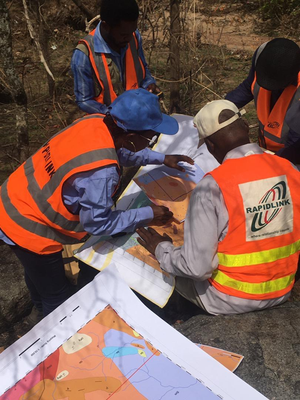
“Portable analysis can make a substantial difference by allowing geologists to obtain useful analytical information much closer to the point of sampling. For gold exploration, handheld XRF can help identify geochemical patterns and pathfinder elements associated with mineralisation. For lithium, LIBS technology offers direct elemental analysis of lithium in suitable geological samples, while XRF can provide complementary information on associated elements. In rare earth exploration, specialised XRF instruments can help characterise relevant elements and geochemical indicators. For tin and associated mineral systems, XRF can support the investigation of elemental distributions and pathfinders, depending on the target elements and sample matrix. These technologies allow teams to screen more samples, identify areas of interest and refine sampling or drilling priorities sooner. The result is a more informed exploration workflow, with laboratory analysis retained for confirmation and definitive assay requirements.”
05. How much of a constraint is assay turnaround for explorers and junior miners in Nigeria today, and where does handheld analysis sit alongside laboratory assay in closing that gap?
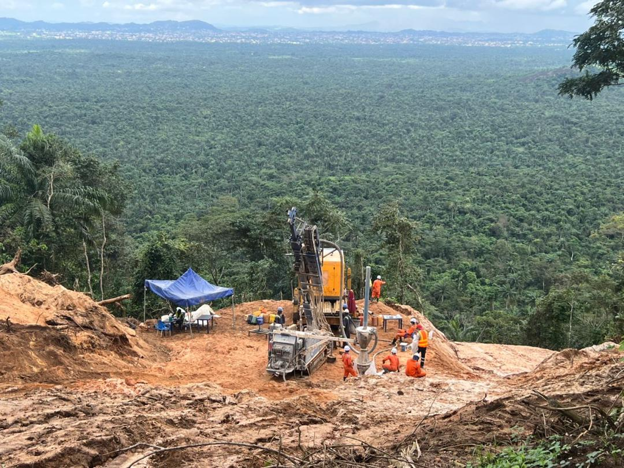
“Assay turnaround can be a significant operational consideration, particularly for exploration teams working across large or remote areas where transporting samples to a laboratory introduces additional time and logistical costs. Although the extent of the constraint varies between projects and laboratories, delays in receiving results can slow the evaluation of targets and the planning of subsequent exploration activities. Handheld analysis helps bridge this gap by providing rapid preliminary data at the point of sampling. Geologists can use these results to screen samples, investigate geochemical trends and prioritise material for laboratory submission. It is important to emphasise that portable analysis does not replace laboratory assay. Instead, it complements the laboratory by helping teams make better use of their time, direct laboratory resources towards the most relevant samples and make more timely, evidence-based decisions.”
06. Nigeria is pushing for more local processing and value addition. What role does real-time grade and quality data play in processing plants, mineral trading and metals recycling, and where do you expect demand to grow first?
“Reliable analytical data is fundamental to improving transparency, efficiency and confidence throughout the mineral value chain. In processing operations, rapid elemental information can support material characterisation, feedstock screening and grade-control decisions, helping operators identify variation before it becomes a larger operational issue. In mineral trading, portable analysis can provide an initial assessment of material composition and support more informed discussions between buyers and sellers, subject to the limitations of the measurement method and the relevant commercial specifications. In metals recycling, handheld XRF and LIBS allow operators to identify and sort many metal and alloy types quickly, improving material segregation and helping protect the value of recovered materials. In our view, near-term opportunities in Nigeria include gold and critical-mineral exploration, followed by broader applications in mineral processing, quality control and metal recycling. As local beneficiation develops, the value of accessible, reliable analytical data will become increasingly important.”
07. Which recent developments in your XRF, LIBS and NIR range are most relevant to operating conditions in West Africa, and what can visitors expect from SciAps at Nigeria Mining Week?
“SciAps offers complementary technologies designed to address a wide range of analytical requirements. Our XRF range supports rapid elemental analysis across mining, metals and quality-control applications. The X-555, with its 55 kV X-ray tube, is particularly relevant to specialised rare earth exploration and the analysis of challenging elements. Our Powerhouse 80 kV model further extends our high-performance XRF capabilities, offering enhanced excitation for demanding analytical applications where sensitivity and the ability to measure challenging elements are important.
Our LIBS range provides complementary capabilities for lighter elements, including lithium, which conventional handheld XRF cannot directly measure. The Z-903 offers broad elemental analysis capabilities, while our handheld ReveNIR analyser provides mineralogical information that can assist with core logging, alteration mapping and exploration targeting. The ability to combine elemental and mineralogical data is particularly valuable when working with complex geological materials.
At Nigeria Mining Week, we look forward to engaging with mining professionals, demonstrating relevant analytical capabilities and discussing how these technologies can be integrated into practical exploration and operational workflows. Through our partnership with Titan Minerals, we also want to emphasise our commitment to strengthening local relationships and improving access to technical support across the region.”
08. Finally, what message would you like to send to investors, policymakers and mining professionals about the role of fast, reliable data in building confidence in Nigeria’s mining future?
“Nigeria has significant potential to develop its mineral resources and strengthen the contribution of mining to economic growth, industrial development and local value addition. Realising that potential requires more than identifying mineral deposits; it requires reliable information, sound technical decisions and confidence throughout the value chain. Portable analytical technologies can contribute by making useful data available earlier, supporting more efficient exploration, improving material identification and helping operators allocate resources more effectively. However, speed must always be matched by appropriate measurement practices, quality control and validation through laboratory analysis where required. For investors, this can support better-informed project evaluation; for operators, it can improve decision-making; and for policymakers, reliable data can contribute to more transparent and responsible resource development. At SciAps, our objective is to help put practical analytical capabilities into the hands of the people making these decisions. Combined with local expertise and effective technical support, we believe these technologies can play a meaningful role in building confidence in Nigeria’s mining future.”